
If you have ever stared at a bag of weed wondering whether something else is hiding in it, you are not alone — and fentanyl is the contaminant people worry about most. The question behind this article is a reasonable one. Unfortunately, the answer is not the reassuring checklist many web pages pretend it is.
That is the whole article in one paragraph, and it is worth sitting with before going further. Everything below explains why sight fails, what fentanyl actually looks like in its own forms, which supposed warning signs are real but unreliable, and what genuinely reduces the risk. This article is general information, not medical advice, and the position described here is dated 4 November 2026.
Why can’t you see fentanyl in weed?
It comes down to dose. Fentanyl is a synthetic opioid that the US Centers for Disease Control and Prevention (CDC) describes as up to 50 times stronger than heroin and 100 times stronger than morphine. The US Drug Enforcement Administration (DEA) states that just two milligrams of fentanyl — roughly 10 to 15 grains of salt — can be a lethal dose. An amount that small, dusted across or dissolved onto cannabis flower, is easily hidden among the plant’s own textures.
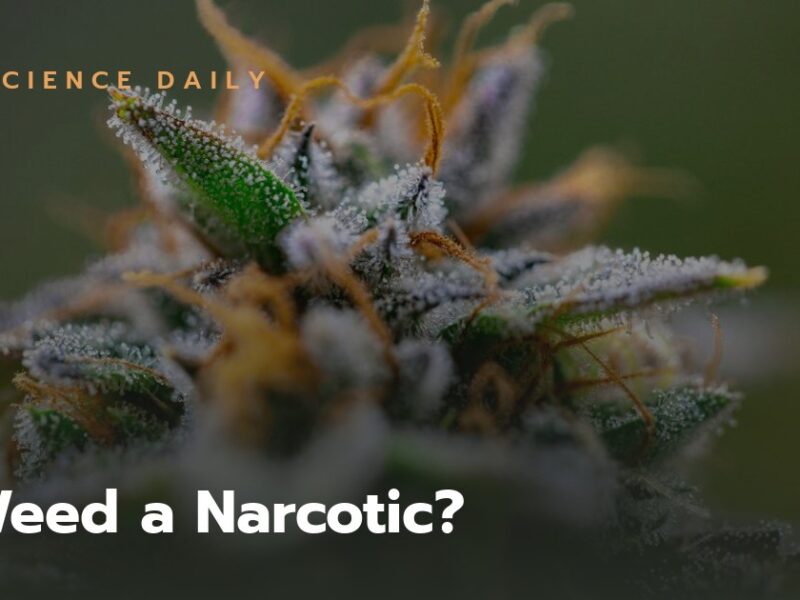
Cannabis flower is already frosty, sticky, and variable in colour. Its trichomes — the tiny resin glands that give good bud its crystalline sparkle — look, to the naked eye, a lot like a fine powder or tiny crystals. That is the core problem: the thing you would be looking for resembles a normal feature of the plant itself. A dusting of white powder on a bud could be trichomes, kief, or a contaminant, and no amount of squinting separates those possibilities reliably.
The CDC puts it bluntly: drugs may contain deadly levels of fentanyl, and “you wouldn’t be able to see it, taste it, or smell it.” The only way to know, the CDC says, is to test with fentanyl test strips. That is not a cautious disclaimer — it is the central fact of this topic, and it is why this article refuses to give you a “five signs your weed is clean” list. Any page that implies you can eyeball your way to safety is selling confidence it cannot back up.
What does fentanyl look like on its own?
Fentanyl itself does have recognisable forms — just not forms that help much once it is mixed into something else. The CDC notes that illegally made fentanyl is available in different forms, including liquid and powder, and that powdered fentanyl “looks just like many other drugs.” Here are the forms that actually turn up:
- White or off-white powder. This is the most common form of illicit fentanyl. It can be fine and floury or slightly granular, and it may be white, off-white, tan, or grey depending on what it has been mixed with. On its own it looks unremarkable — which is precisely the danger.
- Pressed pills. Illicit fentanyl is frequently pressed into tablets made to resemble prescription opioids such as oxycodone. The CDC notes that pills made to look like other prescription opioids are a standard fentanyl vehicle, and the DEA warns that fake pills are indistinguishable from real ones without laboratory testing.
- Liquid. In liquid form, fentanyl can turn up in nasal sprays and eye droppers, or dropped onto paper or small sweets, according to the CDC. Dissolved in liquid, it can also be sprayed onto plant material — one reason laced flower may show no powder at all.
- “Rainbow fentanyl.” Since August 2022, the DEA has warned about brightly coloured fentanyl — pills, powder and chalk-like blocks dyed pink, blue, green, yellow and other colours, seized in 26 US states. The colours change nothing about the drug: the DEA’s laboratory testing found no indication that any colour is more or less potent than another. Every colour, shape and size should be treated as equally dangerous.
Notice what all of this means for weed specifically. Fentanyl does not arrive in flower wearing a label. It arrives as a powder that looks like other powders, a liquid that dries invisibly, or not at all in any visible form. Knowing what fentanyl looks like in a baggie does not teach you what it looks like in a bud — because in a bud, most of the time, it looks like nothing.
What might fentanyl-laced weed look like?
Other guides list visual “signs” of laced weed, and some of them are worth knowing — as reasons to stop and discard the product, not as a diagnostic test. Here is each supposed clue, and what it actually proves:
| What you might notice | What it could be | What it does NOT prove |
|---|---|---|
| White or grey powdery residue that flakes off the buds | Fentanyl powder, crushed pills, or simply kief and trichomes knocked loose | It does not prove fentanyl is present — and its absence does not prove fentanyl is absent |
| Odd discolouration — pale, bluish or greyish patches | Contamination, poor curing, or natural strain variation | Colour alone cannot identify any specific substance |
| Unusually dry, gritty, damp or sticky texture | Sprayed or treated flower, or just badly cured cannabis | Texture changes have many causes; none of them is specific to fentanyl |
| Loose granules or dust in the bottom of the bag | Crushed pill material, kief, or broken trichomes | Granules cannot be identified by eye; only testing identifies them |
| A chemical or fuel-like smell | Contamination, solvents, or pesticides — or nothing unusual at all | Smell is not a fentanyl test; pure fentanyl at these levels has no reliable smell |
| Flower that looks completely normal | Clean cannabis — or fentanyl dissolved and sprayed on, leaving no trace | Normal appearance proves nothing; this is the most dangerous row in the table |
The pattern is the point. Every clue on the left has innocent explanations, and the most dangerous case — contaminated flower that looks perfect — produces no clue at all. That asymmetry is why public-health agencies keep repeating the same advice: treat suspicion as a reason not to use the product, and treat a clean appearance as no evidence either way.
It is also worth keeping the risk in proportion. Our guide to how to tell if weed is laced explains that confirmed cases of fentanyl in cannabis flower itself are uncommon — the everyday contamination problems in unregulated markets are mould, pesticides and synthetic cannabinoids. Fentanyl in flower is rare, but it is treated as an emergency whenever it is suspected, because the consequences of missing it are so severe. If you want the contamination side of the picture, our guide to what mouldy weed looks like covers the far more common problem in detail.
Can you smell or taste fentanyl in weed?
No — not reliably, and trying is a bad idea in itself. The CDC’s position is that fentanyl in drugs cannot be seen, tasted or smelled at the levels that matter. Some guides claim laced weed smells like petrol, paint or nail polish, or tastes bitter or chemical. Those claims are not backed by any reliable evidence about fentanyl specifically: a chemical smell or taste tells you something is off, but it cannot tell you what is off, and its absence tells you nothing at all.
There is a second reason not to rely on taste: taste-testing a suspected contaminant means deliberately consuming some of it. With a drug potent at the two-milligram level, that is not a test — it is exposure. If flower smells strongly chemical, tastes harsh and wrong, or simply feels suspicious, the safe response is the same in every case: do not use it, and do not try to confirm your suspicion by using more of it.
The same caution applies to the old habit of judging flower by its trichomes. Healthy trichomes are frosty and sticky with resin; powder feels dry and dusty. That distinction is real and can help you spot poor-quality or adulterated flower in general. But it cannot separate fentanyl from flour, talc, or any other white powder, and it certainly cannot rule fentanyl out. Think of it as a quality check, not a safety test.
What actually tells you fentanyl is there?
Only testing. There are two realistic options, and they are very different in what they offer:
Fentanyl test strips. These are small paper strips, originally developed for urine testing, that detect fentanyl in a dissolved sample within minutes — the CDC notes results typically arrive within five minutes. In practice, a small sample is dissolved in clean water and the strip is dipped according to its instructions. One line generally means fentanyl was detected; two lines generally means it was not. But strips have real limits, and understanding them matters: they detect fentanyl and many analogues, not every synthetic opioid — the CDC specifically warns they might not detect more potent fentanyl-like drugs such as carfentanil. They detect presence, not amount or strength. A negative result on one sample does not prove the rest of the supply is clean, because fentanyl may not be spread evenly through a product. And no strip is 100% accurate — false positives and false negatives both happen. Strips are a harm-reduction tool, not a guarantee, and their legal status varies by place, so check local rules before relying on them.
Laboratory and drug-checking services. Where available, drug-checking services can analyse a sample properly and identify what is actually in it. Availability varies enormously by country and region, and the legal status of such services differs by jurisdiction — but if one exists near you, it is the closest thing to a real answer. Keep the product and its packaging if you can: it may help clinicians or a checking service identify what was involved.
Beyond testing, three habits reduce the risk more than any inspection ever will. First, buy from licensed, regulated sources where products are lab-tested and labelled; unregulated supply is the single biggest risk factor. Second, do not use alone — someone nearby who can call for help is the difference between a scare and a death. Third, carry naloxone if it is available to you: it is a fast-acting medicine that can reverse an opioid overdose, and it is worth having before you ever need it. Knowing the overdose signs matters too: slowed or stopped breathing, extreme drowsiness or unresponsiveness, and lips or nails turning blue or grey are emergencies. Call emergency services, give naloxone if you have it, and tell responders honestly what was taken — they are there to treat, not to punish.
One last clarification, because it causes real confusion: fentanyl is an opioid, and cannabis is not. Our explainer on whether weed is a narcotic sets out the pharmacology — cannabis acts on the endocannabinoid system, while fentanyl acts on opioid receptors, which is exactly why fentanyl can stop breathing and cannabis alone does not carry that same respiratory risk. When the two are mixed, the opioid risk comes along for the ride, whatever the cannabis itself would have done.
Frequently asked questions
What does fentanyl look like in weed?
Most of the time, it looks like nothing at all. Fentanyl is a white or off-white powder in its own form, but at contamination levels in cannabis flower it is usually invisible, odourless and tasteless. Some contaminated flower shows a powdery residue, odd discolouration or a strange texture — but normal-looking flower can also be contaminated, so appearance cannot confirm safety.
Can you see fentanyl in weed with the naked eye?
Not reliably. A lethal dose is around two milligrams according to the DEA — an amount that can hide easily among trichomes and kief. The CDC states that deadly levels of fentanyl in drugs cannot be seen, tasted or smelled. Only test strips or laboratory analysis can detect it.
Does fentanyl-laced weed smell different?
There is no reliable smell. Some guides report chemical, fuel-like or paint-like odours from contaminated products, but those smells are not specific to fentanyl and many contaminated samples smell entirely normal. A chemical smell is a reason not to use a product — it is not a fentanyl detector, and a normal smell is not an all-clear.
Do fentanyl test strips work on weed?
Yes, with limits. Test strips can detect fentanyl in a dissolved cannabis sample within minutes, and the CDC notes they typically give results in about five minutes. But they detect presence, not amount; they may miss some fentanyl analogues such as carfentanil; they are not 100% accurate; and a negative result on one sample does not prove the whole supply is clean. Use them as one layer of protection, not as proof of safety.
What should I do if I think my weed has fentanyl in it?
Do not use it, and do not use alone. If someone has already used it and shows overdose signs — slow or stopped breathing, unresponsiveness, blue or grey lips or nails — call emergency services immediately and use naloxone if available. Keep the product and packaging if you can, and tell responders what was taken. If you are unsure, a fentanyl test strip or a drug-checking service is the only way to get a real answer.
Sources
- Centers for Disease Control and Prevention (2024). Fentanyl Facts | Stop Overdose. https://www.cdc.gov/stop-overdose/caring/fentanyl-facts.html (fentanyl up to 50 times stronger than heroin and 100 times stronger than morphine; powdered fentanyl looks like many other drugs; liquid forms; “you wouldn’t be able to see it, taste it, or smell it”; test strips typically give results within 5 minutes; strips may not detect carfentanil; synthetic opioids contribute to nearly 70% of overdose deaths).
- US Drug Enforcement Administration (2022). DEA Warns of Brightly-Colored Fentanyl Used to Target Young Americans (press release, 30 August 2022, updated October 2022). https://www.dea.gov/press-releases/2022/08/30/dea-warns-brightly-colored-fentanyl-used-target-young-americans (rainbow fentanyl seized in 26 states; pills, powder and chalk-like blocks; no indication any colour is more potent; fake pills indistinguishable from real pills without laboratory testing; two milligrams can be lethal).
- Bergh, M. S.-S. et al. (2021). Selectivity and sensitivity of urine fentanyl test strips to detect fentanyl analogues in illicit drugs. International Journal of Drug Policy, 90, 103065. https://doi.org/10.1016/j.drugpo.2020.103065 (test-strip detection of fentanyl analogues; cited by the CDC).
Published: 4 November 2026 · Last updated: 4 November 2026 · Author: 420 Science Daily · This article is general information, not medical advice. If you suspect an overdose, call emergency services immediately.