
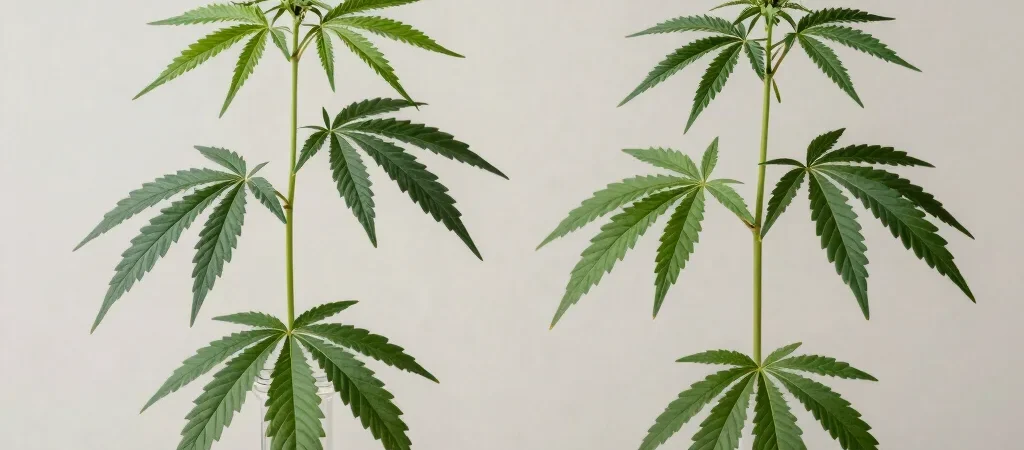
Two strain listings can both say “indica” and still offer very different descriptions of their lineage, structure, and aroma. The label is easy to scan, which is exactly why it can be mistaken for a complete explanation. Treat indica and sativa as broad shorthand, then read the details underneath.
A Useful Label Has Limits
Indica and sativa have long been used as botanical and commercial descriptors, but contemporary strain names and breeding histories do not always fit neatly into those boxes. Many market profiles use the terms as broad categories rather than as precise accounts of ancestry. That makes the label a quick filing cue, not a dependable substitute for a strain’s documented background.
Look for Observable Details
A more informative guide names the lineage when it is known and describes plant characteristics in concrete terms. It might discuss growth form, leaf shape, or a particular aroma rather than relying only on a category label. These traits still vary with genetics and cultivation, but they give readers clearer details to compare.
Compare Like With Like
When reading two profiles, compare their stated sources, lineage, and batch-specific information before drawing a conclusion from the indica or sativa tag. If the guide offers little beyond that tag, it may simply not have enough detail to support a closer comparison. Keep the label in view, but let the evidence in the profile do the explaining.